
Cryonics Questions and Choices
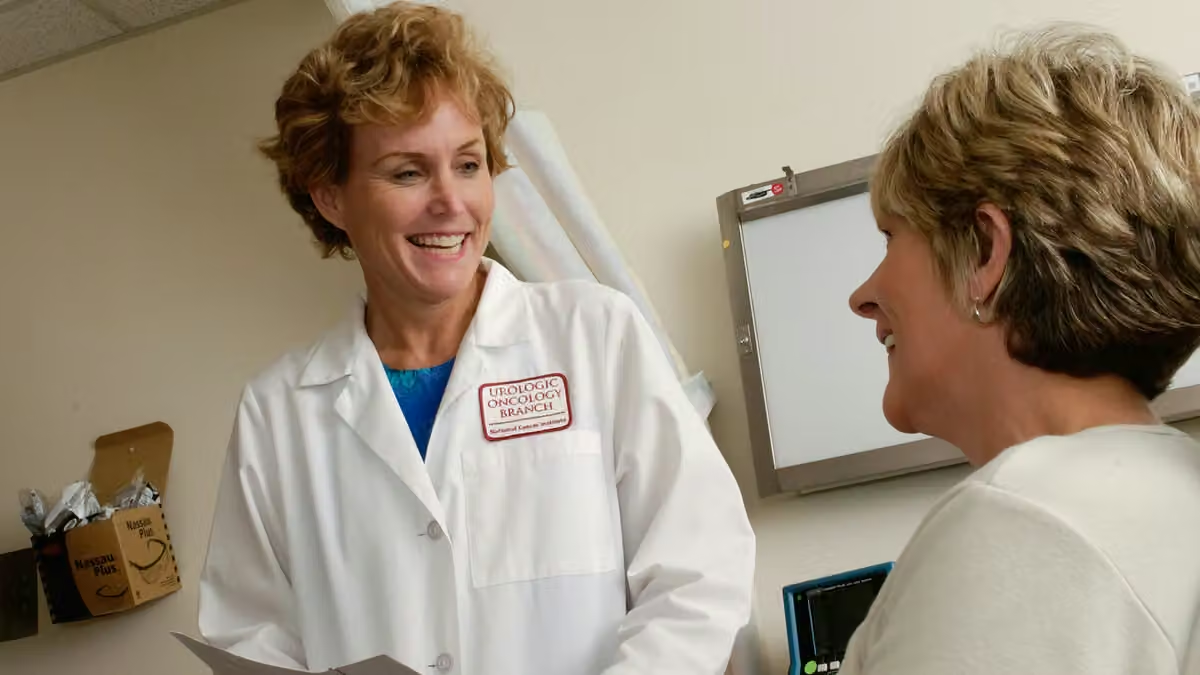
A room full of careful hope
What does hope look like when nobody can promise an ending?
At a cryonics conference, it can look like steady work. It can also look like old friends meeting again, new devices on a table, and a room that feels alert rather than dreamy. The people there were not pretending certainty. They were testing methods, comparing notes, and trying to make future care less vague and more exact.
That matters. Cryonics lives in the space between a hard fact and a possible future. The hard fact is death. The possible future is that better preservation, better transport, and better repair tools may one day give today’s patients a chance that does not exist now.
The mood at the meeting was unusually strong. People felt solidarity. They felt progress. They felt as if they were near something large, though still unnamed. That kind of feeling can mislead if it becomes a promise. But it can also steady people who are doing difficult work for a far-off goal.
What the work was trying to solve
Cryonics begins after legal death is declared. It is not a treatment for a living person. From that point, the problem is simple to state and hard to solve. The body must be cooled, protected, and moved fast enough to limit more damage.
This is where the practical terms matter. Standby means being ready before death is declared. Stabilization means slowing harm after legal death. Transport means moving the patient to the place where preservation steps can continue. Preservation means using cold and protective chemicals in the hope that future repair may still be possible.
A beginner can think of it this way. If a house has suffered smoke damage, the first hours matter. You do not wait and hope the roof holds by itself. You secure the place, reduce more harm, and get it to the people best able to help. Cryonics uses a similar logic, though the stakes are far greater and the outcome far less certain.
One research result at the time gave people reason to pay attention. In a cat retina study, tissue recovered after two hours at body temperature and after 45 minutes at minus 20 Celsius when a 40 percent DMSO mixture was used. DMSO is dimethyl sulfoxide, a cryoprotectant. That is a substance meant to reduce ice injury during cooling. It was still in use, though the exact concentrations and methods had changed since the earlier conference.
That is not proof that a human can be revived. It is not even close to that. But it did show why some people kept taking the field seriously.
A machine that showed the direction of the field
One of the most vivid signs of progress was a prototype perfusion machine displayed by Fred Chamberlain. Perfusion means pushing a fluid through the body. In cryonics, that fluid is used to replace blood and carry cryoprotective chemicals into tissue.
The machine used a two-loop design. One loop handled perfusion. The other handled heat exchange. A common pump drove both. In plain terms, it was built to move fluid and control temperature with the same basic system.
The perfusion circuit included a flow meter, a valve for flow control, pressure gauges, and a return filter. The heat exchanger side included a main reservoir and a bypass. The plan was to add more instruments later. Those included a thermistor network, a pH device, a measure of specific gravity, a refractive index device, a drip chamber, and an isolation reservoir.
That list may sound dry. It is not. It is the language of care becoming more exact. Every added reading is a way to see what is happening inside a body that cannot speak for itself.
I find that kind of effort moving in a quiet way. It does not flatter the imagination. It asks for patience.
What the gathering gave people
The conference was not only about machines. It was also about people. Members came from several cryonics groups across different U.S. states. Some had been long out of touch with one another. Seeing them again mattered.
There was also praise for the timing and the presentation. The production was described as polished and well handled. That may sound small, but in a young field, care in presentation often reflects care in method.
The room held a mixture of renewal and discipline. There was excitement, but it was not loose excitement. It was the sort that comes from people who know the work is unfinished and still choose to keep building.
A case that gave the hope a human face
The most urgent cryonics story from that period involved an eight-year-old French-Canadian girl in Montreal, Genevieve de la Poterie. She had kidney cancer, and the cancer had spread too far for a cure. Her father saw a Canadian television program that mentioned cryonics, found a contact number, and asked for help.
A team from the cryonics side responded quickly. Robert F. Nelson and mortician Joseph Klockgether flew to Montreal within days. Equipment and chemicals were brought in. Additional DMSO was sent from stock in plastic jugs. The point was not to make grand claims. The point was to be ready.
Later, the girl was taken to Los Angeles. The aim there was practical and clear. If freezing became necessary, the team wanted to be ready fast. But the first priority was to get her to a good hospital. That decision turned out to matter more than any machine.
Once in Los Angeles, her condition improved. Doctors said she might be saved by dialysis and then a kidney transplant when a donor became available. Dialysis had already started. Surgeons later removed the second kidney, and what they found fit the earlier hopeful reading.
The final report at that time was still not fully settled. But the direction was better than people had first feared. She would probably return to Montreal for a hospital that had dialysis and transplant care.
That case sits in a difficult place. It is not a cryonics success story in the simple sense. It is also not a failure in the simple sense. It shows how cryonics can meet real medicine in the same crisis, and how fast action, clear thinking, and luck all matter.
What this lesson leaves open
A cryonics conference can inspire hope without pretending to erase doubt. That is the honest shape of the field. It asks people to think about standby, stabilization, transport, and preservation as serious steps, not magical ones.
It also asks a harder question. What does hope mean when the result is still unknown? For me, the only honest answer is that hope can be real without being certain. It can be disciplined. It can rest on work rather than wish.
The reader can now see how a cryonics conference, a prototype machine, and a child’s medical crisis all belong to the same lesson. They show why people keep asking whether future repair may one day reach farther than present medicine can.
The Longer Horizon keeps that same question in view, and it asks it without sugarcoating what we do not yet know.
Article by Lea Varga ·